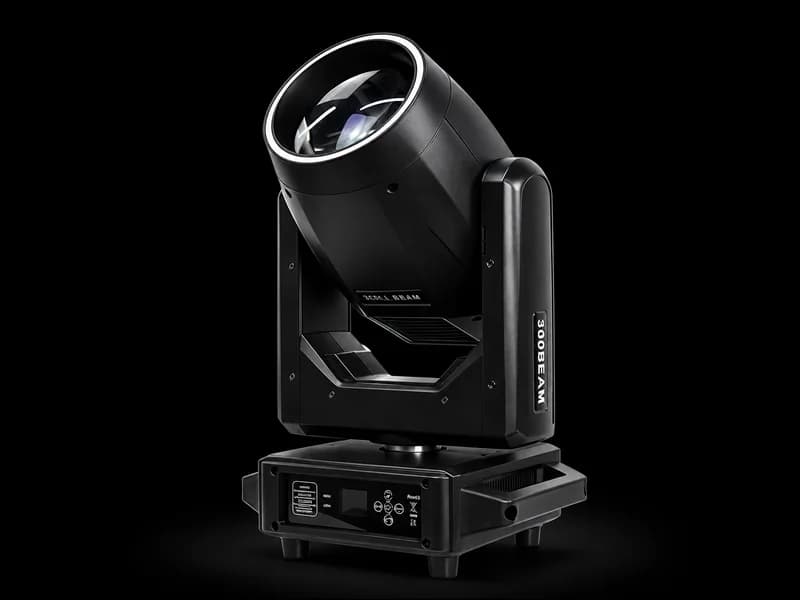
- 300 W LED beam, 70,000 lm
- 6000K, CRI 70, dimmable
- DMX512 control, IP33
- 11.8 kg, pole-mount ready

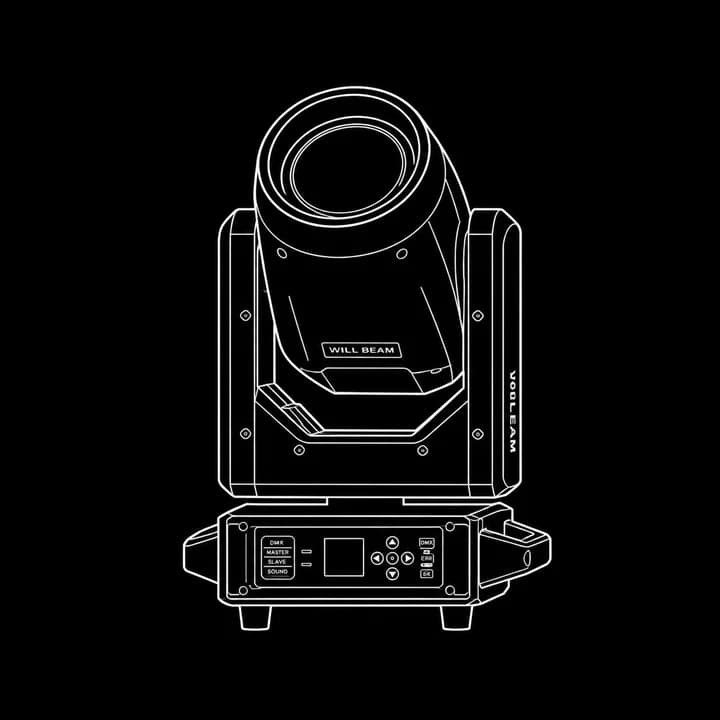
Beam, wash and compact moving heads for clubs, weddings and touring floors.
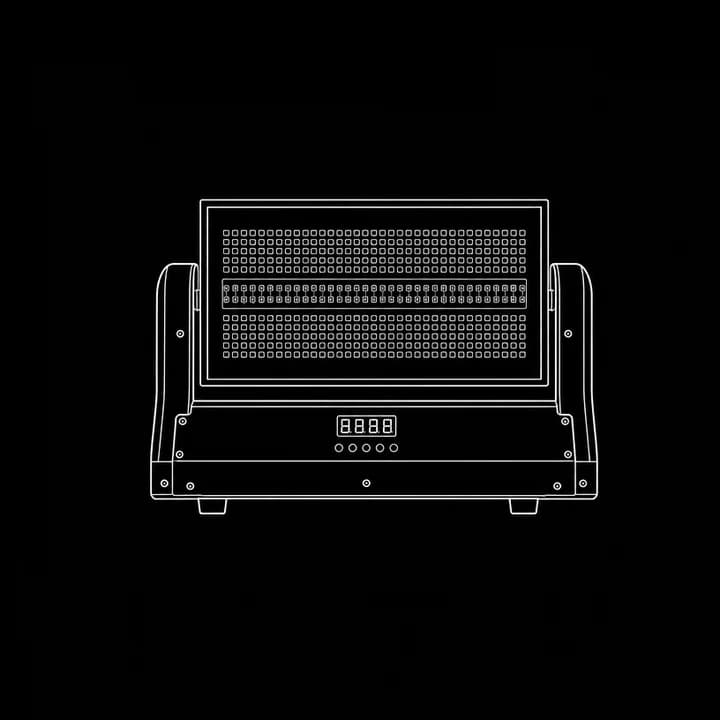
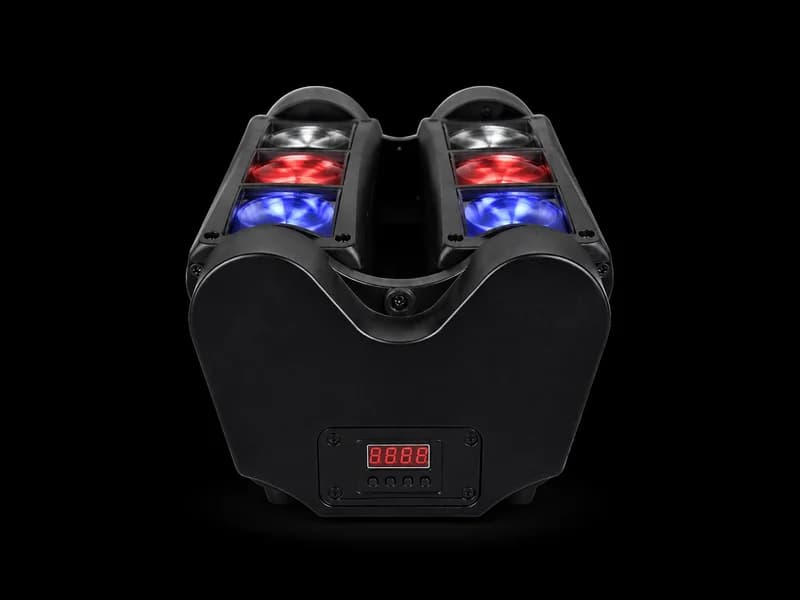
PARs, audience blinders and kinetic LED effects for venues and rental plots.
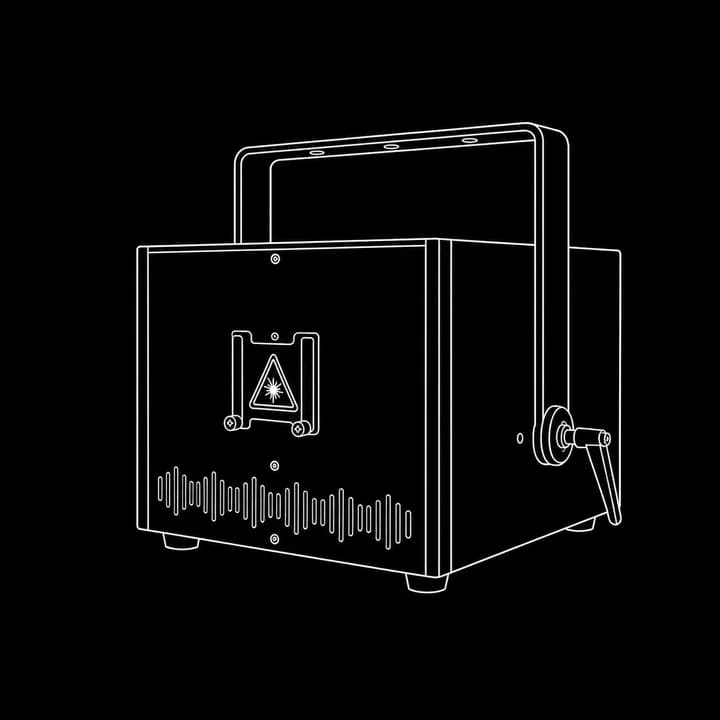
Compact animation and show lasers for clubs, stages and event installs.
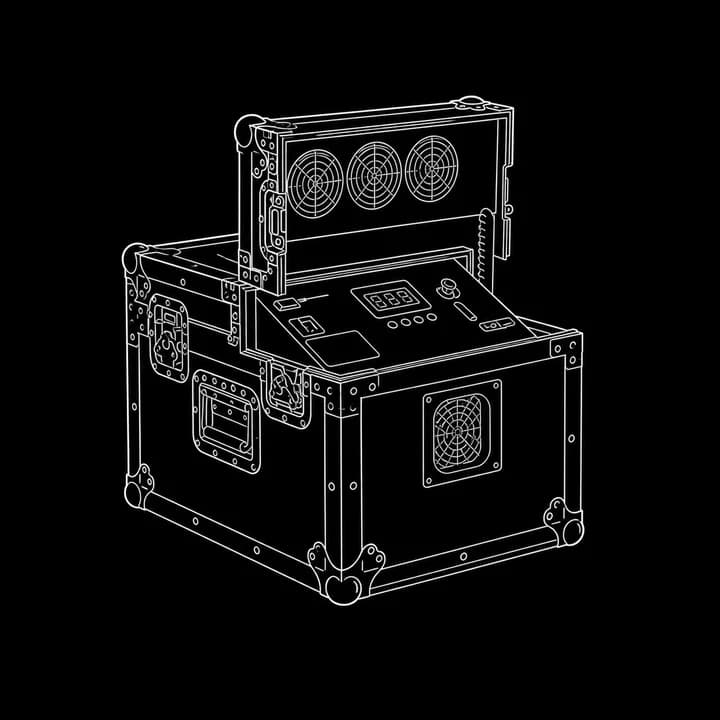
Smoke rings, haze, fog jets, fog bubbles and water-mist flame effects.
What each moving head type does on stage, where it fits, and how distributors and venues combine all three in one plot.
A beam moving head exists to cut through air. Narrow optics (typically single-digit degrees), a compact high-output source and strong contrast against haze make beams the classic aerial look for clubs and concerts.
Choose beams when the fixture hangs far from the audience or needs to read across a large room: mid-air crossing effects, tunnel looks and ceiling sweeps. They are the least useful fixture for even color washes — the output is deliberately concentrated.
Spot and profile heads add imagery: rotating and static gobos, prism effects and in higher classes framing shutters. They project texture onto floors, scrims and architecture instead of drawing lines in the air.
For rental stocks, spots carry most of the 'designed look' work — logos at corporate events, textured city looks on stage floors, aerial breakups when combined with a prism.
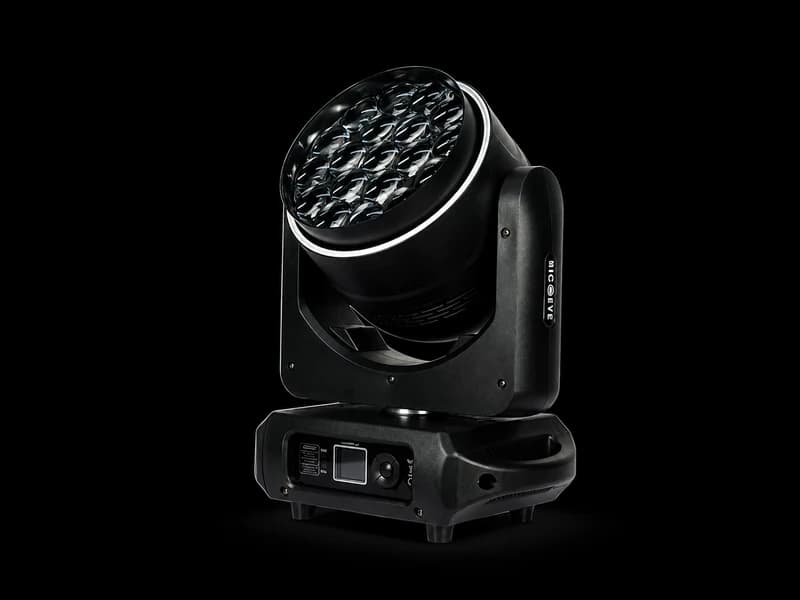
A wash moving head trades punch for coverage. Wide zoom ranges and multi-LED sources (such as 19 × 15 W RGBW bee-eye arrays) spread saturated color over stage, dance floor or audience.
Washes are the backbone of any plot: they light people and scenery, and they fill the space between beam looks. Bee-eye optics add a kaleidoscopic mid-air effect on top of the wash, which is why they dominate wedding and club riders.
Most working rigs mix all three roles. A common small-venue split is beams for aerial work, a wash head over the floor or stage, and effect fixtures (blindes, strobes, lasers) layered on top.
Budget rule of thumb: spend on washes first — they are on more hours per show — then beams for impact, and add spots once the first two roles are covered. See the current moving head catalog for beam and wash models in production.
Send the room size, fixture list or a reference photo — we confirm models, quantities and lead times.